PLEASE NOTE: Dog Garden Flags are currently unavailable. Please check back later. Thanks for your interest.
Miniature Poodles
Breed Information
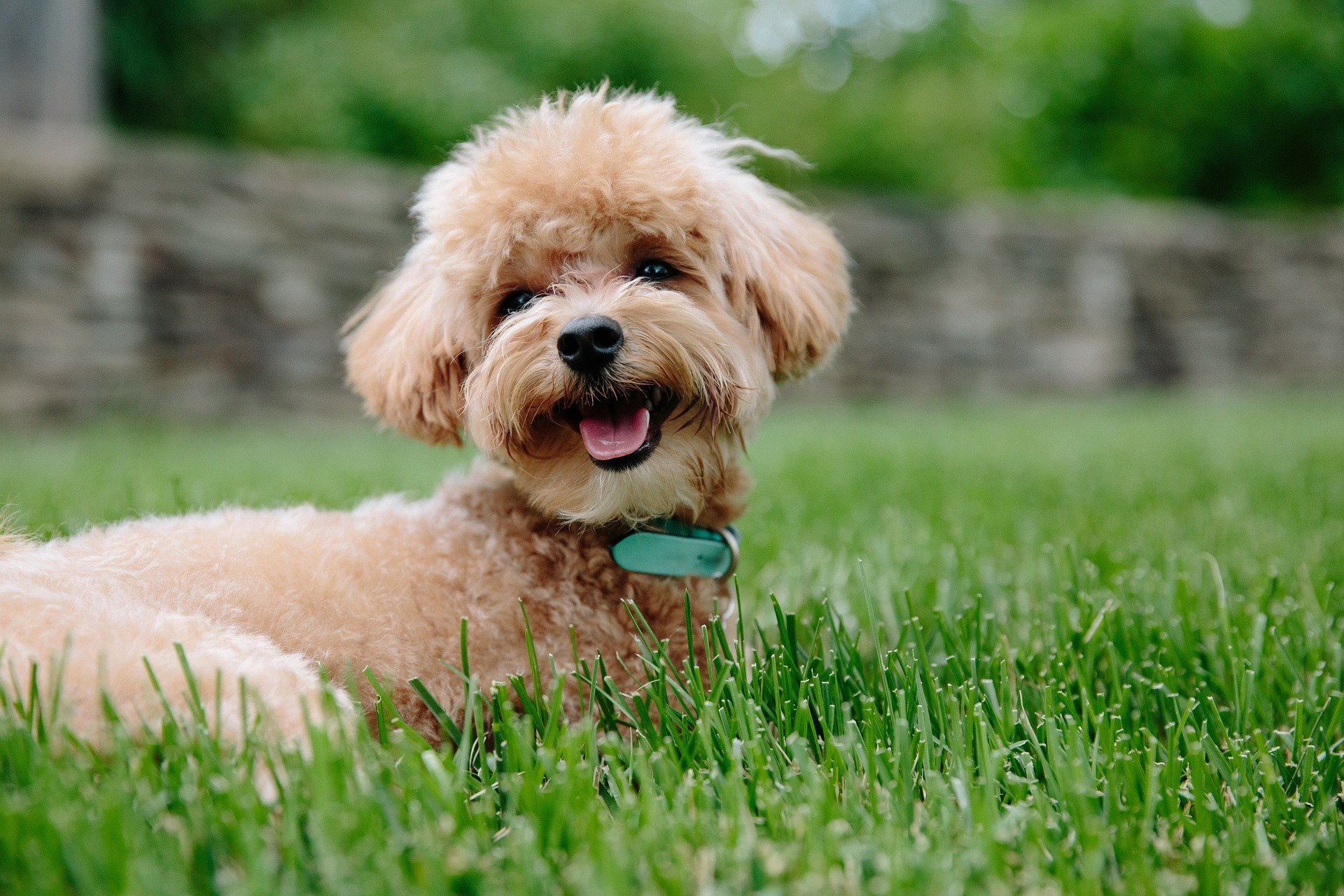
"Even the tiniest Poodle or Chihuahua is still a wolf at heart”
-Dorothy Hinshaw Patent (author)
Miniature Poodles
Bone Chart
How They Score
0 - 5 Bones
| Trainability |  |
| General Breed Health |  |
| Housebreaking ability | |
| Low Maintenance | n/a |
| Good w/Other Pets | |
| Non-Shedding |
|
What we LOVE about Miniature Poodles

Watch Dogs- Miniature Poodles make keen watch dogs! You can trust this highly responsive breed to alert you upon every knock at the door or ring of the bell... or random cat who happens to wander onto her territory.
Size- AKC requirement for size is no larger than 15 inches high at the shoulders. Miniature poodles are not great pets for apartment dwellers unless there is oppurtunity for a good amount of daily exercise.
Friendly- Like any breed, proper training and socialization as a puppy will will help to ensure a much friendlier animal. Miniature Poodles are notorious for their love of people and are known to be good with children.
Trainability-Patience will get you much further than scolding with any breed. Shouting, impatient or harsh training is completely unnecessary and will hinder progress. Poodles are eager to please and learn new tricks very easily under the right circumstances.
Loyal- They are very affectionate and loyal dogs. Unlike many breeds, they don't attach exclusively to any one person in family life. A miniature poodle is happy be the 'family dog', spreading his loyalties equally among everyone in the household.
Excitability- In low stress environments and when properly socialized, adult poodles are gentle and easy going around new people. Some blood lines are more excitable than others. It's extemely important to choose a breeder wisely. Please see our FAQ page for more information.
Non Shedding- They are non-shedding dogs (losing very little to no hair). Many people choose the various poodle varieties for their hypoallergenic qualities.
| Poodles are a highly sensitive breed. A chaotic household, constant loud noises and undue stress can lead him/her to defensive behaviors like biting and social shyness. Careless breeding and boredom can also contribute to these behaviors. |
Side Note:Why not consider Adopting a Miniature Poodle?
With the popularity of this breed always increasing, so too has the number of substandard, oppurtunistic breeders (puppy mills) fixed on taking advantage of our desire for a pure bred dog. They are over-producing inferior puppies for the sake of profit while their breeding dogs suffer unimaginably from disease and neglect... Most of the time living their ENTIRE LIVES in tiny cages.
Please learn more about how to avoid puppy mill dogs by reading our FAQ page... Then please spread the word to help put an end to them.
There is most definitely a A Poodle in your area who needs you! Your dog could be waiting. Check petfinder.com or another similar rescue site!
-More Stuff About Poodles-
Frequent grooming-Poodles need regular grooming. Her coat requires a commitment of frequent brushing and trimming to keep it from becoming matted. If you plan to own a poodle, you might want to make friends now with your local groomer. You’ll get to know her very well on your regular visits.
Exercise Requirements- Poodles need regular oppurtunities to run and play. A bored dog is an unhappy dog and this is especially true for miniature and standard poodles. Offering your dog plenty of toys and daily walks (or a fenced in back yard) is esential for mental and physical health.
Behavioral Issues- While a carefully chosen breeder can help to alleviate undesirable traits, there are no guarantees. Snapping, unprovoked biting and timidity are common characteristics of unsocialized poodles. All of these can be avoided by exposing your dog to other people, sounds and other animals while he's still a puppy.
Separation anxiety is common- He will show you his frustration by destructive chewing and barking or by having "accidents" on your furniture. This is probably not the breed for you if you work long hours and would have to leave him home alone.
-Health Issues-
Poodles commonly suffer from problems with their eyes. Entropion, (a condition in which their eyelids fold inward) and Trichiasis (ingrown eyelases) cause serious irritaion and may require surgery to correct. More serious because it cannot be treated is Progressive retinal atrophy (PRA), a retinal degeneration which leads to blindness.
Other conditions such as cataracts, glaucoma and lacrimal duct atresia-(over tearing) are common among poodles.
Patellar Luxation- (Knee popping in and out of place), ranging from mild to severe is common in many small breeds and the miniature poodle is no exception. A secondary concern of this affliction is osteoarthritis.
Legg-Calvé-Perthes syndrome- A disease seen in varying degrees in many small breed dogs. It's a degenerative loss of bone mass and can lead to a total collapse of the hip joint. Early treatment can help to prevent degenerative arthritis.
Kidney stones are painful and not just for humans. Poodles suffer from this as well. Signs to watch for include blood in the urine, vomiting, restelessness and pain, but it's not unusual to be asymptomatic.
Epilepsy characterized by recurrent, unprovoked seizures can occur in these animals.
Some miniature poodles also suffer from heart disease and intervertebral disc degeneration
Poodles are not without their problems. In fact, they suffer from a wide variety of many genetic health issues and are predisposed to acquiring a great many others due to environmental causes and irresponsible breeding. Below are some of the most common ailments affecting miniature poodles.

New! Comments
Leave us a comment if you have something you'd like to share or add to what you just read here. Or contact us with questions or comments.