PLEASE NOTE: Dog Garden Flags are currently unavailable. Please check back later. Thanks for your interest.
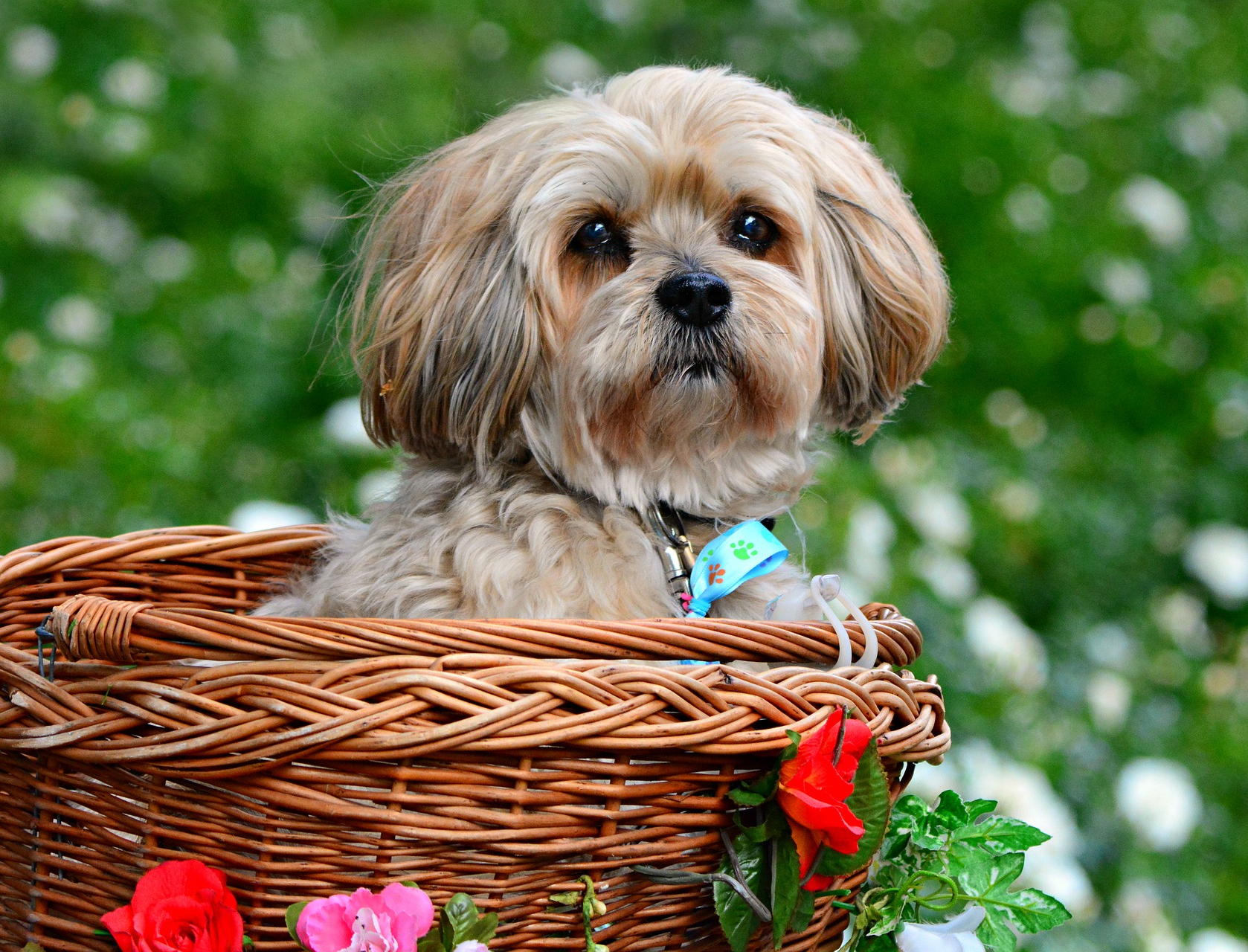
Lhasa Apso
Lhasa Apso Bones Chart
(0 -5 Bones)
| Trainability |  |
| General Breed Health |  |
| Easy Housebreaking | |
| Low Maintenance? | 0 bones- Not Low Maintenance |
| Good w/Other Pets | |
| Good around Children | Not Recommended with Small Children |
| Non Shedding | |
All the many reasons to love them...

Watch Dogs Lhasas make great watch dogs. You can trust this breed to warn you only when there's a need. A Lhasa Apso is not a 'yappy' breed and doesn't bark for the sake of barking.
Size- Typically this breed will stand no more than 11" high at the shoulders, females slightly smaller. Apartment life will suit the exercise needs of a Lhasa well, but walking him a few times per week will help to keep him happy and well.
Trainability- An early start in training could help your dog grow accustomed to obedience, but consistency while he's a puppy will benefit the both of you as he grows into an older dog. Lhasas are a willful breed. They tend to withdraw from what they deem to be 'unfair' or harsh training and will purposely resist your efforts. It's especially important with this breed that proper training is started early. Check out our training page for lots of helpful advice.
Non Shedding- The coat of the Lhasa requires a lot of care, but it is nonshedding. A person with dog allergies or asthma should first test their tolerance before making a commitment to own this breed.
 Adopted Lhasa Apso! Found on Petfinder.com
More about the Lhasa Apso...
A 15 YEAR + COMMITMENT- Lhasas are long lived dogs. Buying or adopting a dog is a commitment to take care of him for his entire lifetime. If you're planning a move or a career or lifestyle change or if you're unsure of your financial ability to feed, vet, groom, house or properly care for another living creature, be honest with yourself and take the decision seriously.
Excitability and Behavioral Issues- As the demand for this breed increases, so too does the number in need of rescue. This is because puppy mills are producing as many litters as possible with no regard for health or temperament of the breeding stock (and most often these dogs suffer unimaginably). The resulting puppies from these mass breeding operations are more likely to have poor dispositions and undesirable behavioral issues.
Housebreaking difficulties- Small breed dogs are among the hardest dogs to housebreak. You'll need to be very patient and probably clean up several messes in the process of housebreaking this breed. We highly recommend the positive training techniques outlined on our dog training page.
Separation anxiety is common- A vast majority of dogs of all breeds suffer anxiety when left alone, Lhasas are no exception. Separation anxiety could result in destructive chewing, loud continuous barking or "accidents" on your carpet or furniture. Crating a dog for long hours every day is not a solution. Check out our page on separation anxiety to learn more.
Maintenance Needs-If you're not prepared for or if you're unable to pay for regular professional grooming, a Lhasa apso is not the breed for you. Their coats are very high maintenance and require frequent brushing, clipping, trimming, etc. to keep from becoming matted. Regular attention should also be given to nails, teeth, ears and pads.
Caution around children- These dogs are not well known for their fondness of children. Constant supervision with this breed is necessary. One little nip is all it takes to injure a child, not to mention the risk inolved to the dog if he should happen to bite or if the child should injure him.
-Health Issues-
Skin Problems- Most of the skin problem in this breed are brought on by parasites and allergies. Fleas and ticks are a nuisance to all mammals, but to a Lhasa they can be especially troublesome.
Kidney Disease Renal Dysplasia is the most serious hereditary disease among Lhasa Apsos. Excessive thirst and frequent urination are the most obvious symptoms to be aware of.
Hip Dysplasia is a developmental subluxation of the hip joints which can eventually lead to arthritis and/or lameness. It's causes are genetic as well as environmental. A secondary concern of this affliction is osteoarthritis.
The use of pet steps has been shown to significantly reduce the wear and tear on joints.
Dry eye- Another concern for Lhasas and their owners are eye problems. Dry eye is a lack of or inadequate tear production. The eyes of Lhasa pups should be scrutinized carefully before a decision is made for purchase.

100 Dog Art Garden Flags Featuring My Own Artwork!
Christmas Garden Flag with Yorkie-Cookies
The adorable Yorkie on this dog Christmas garden flag will add color and flavor to your outdoor space during the most beautiful holiday season!
Summer garden flag with Chihuahua - Home Tweet Home
Summer flag with Chihuahua. Home Tweet Home. Tan and black long haired chihuahua dog art. Original oil painting of Chihuahua by Brooke Faulder
Bulldog Flag - Autumn sunset
An english bulldog flag with autumn colors to decorate your outdoor space. Fall pumpkins, gourds, indian corn and scasrecrow complete the scene

Learn more about me, my art, the mission of this site and Rescue Dogs Are Better here.
We also welcome you to contact us if there are any other questions we can answer for you about anything you saw or read on this site.

New! Comments
Leave us a comment if you have something you'd like to share or add to what you just read here. Or contact us with questions or comments.