PLEASE NOTE: Dog Garden Flags are currently unavailable. Please check back later. Thanks for your interest.
Westies

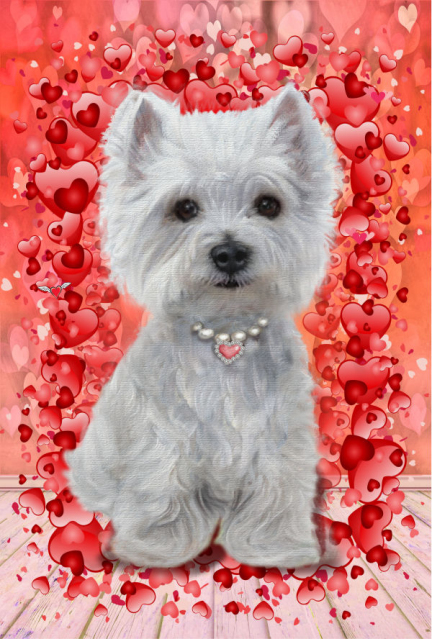
| Trainability |   |
| General Health | |
| Easily Housebroken | |
| Low Maintenance | Sorry, Westies are not low mtnc. |
| Good w/Other Pets | |
| Minimal Shedding | |

Watch Dogs-They make keen watch dogs! West Highland Terriers aren't normally yappy. If your Westie is barking, there's probably a pretty good reason.
Size- Show dogs stand about 11" high at the shoulders and weigh between 15 and 22 pounds. Males tend to be the larger of the two. Despite their small size, they're not great pets for apartment dwellers unless daily exercise can be provided.
Friendly- Westies possess a true terrier temperament. They're loving dogs in family life and enjoy the company of people, but caution should be exercised where strangers are involved. Westies are guard dogs at heart without the size to back it up.
Trainability- They are quick learners who want to please, but possess the intelligence to question what you're teaching and might wonder what's in it for them. Patience, praise and treats will go a long way. Learn all the tricks and some great training techniques by clicking here.
Loyalty-Westies are faithful, affectionate and loyal companions. They love to be in close proximity of their owners, but they're not clingy. Westies possess the rare quality of being affectionate while still maintaining some independence.
Excitability- More excitable than you might think, Westies are terriers and they were bred to hunt. There is a tendency to be aggressive in certain situations. "Laid back" is not a phrase that would be used to describe most Westies.
Minimal Shedding- We have included the Westie with a large group of other non-shedding small breed dogs. While they may not be the most ideal choice for allergy sufferers, they will not leave a huge mess of hair on your furniture and carpeting. Anyone with allegies to dander should first test their tolerance before making a commitment to own a Westie.
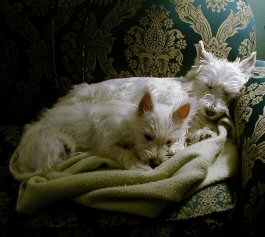 | Westies typically get along better with other animals when they're introduced to them at an early age. A good amount of early socialization will result in a dog who adapts better to the introduction of other pets. |
Side Note: Why not consider Adoption First? With the popularity of small dogs increasing, so too has the number of breeders... and the population of unwanted dogs is ever increasing. There are several Westies near you in need of rescue. Your future dog could be waiting.
We've included some adoptable dogs on our Westie Pictures page! Go there to see their adorable faces and learn how you could become the future hero of a dog in need.
More Stuff About Westies
Willfulness- Known for having a mind of their own, this breed does not respond well to punishment or harsh training. They will completely withdraw from training tactics they deem 'unfair' and have the propensity to fight harsh training with returned aggression.
Maintenance- The high maintenance coat of a West Highland Terrier requires regular brushing, clipping, trimming, etc. to keep from becoming matted. Regular attention should also be given to nails, teeth, ears and pads. Grooming supplies like trimmers along with regular profession grooming will keep your dog looking and feeling great!
Chasing Instincts- West Highland White Terriers are energetic dogs who, by instinct, love to chase. A simple bird could send your Westie bolting. Until he's satisfied with his success in the chase, he'll tune-out your frantic calls to stop him. Never walk a Westie without a harness.
Digging- The instinct to dig is built into the genetic make-up of this dog. Never assume your Westie is secure just because your yard is fenced in. Digging comes naturally, so discouraging this behavior is difficult to say the least.
Aggression- This is not the ideal breed for families with small children or other small animals. Westies are not well known for being excessively tolerant. Careful attention should be paid with any dog around small children, but terriers are an even higher risk.
If you often come home to find puddles of pee on your floor and your belongings chewed to bits, it could be
Separation Anxiety. Click on the link for helpful tips to control this behavior.
-Health Issues-
Skin Problems- Many Westies suffer due to allergies. Atopic Dermatitus known by many other names, is a disorder of the immune system causing allergic reactions to pollen, dust, mold, grass, weeds, etc. Affected dogs can display reverse sneezing, hair loss, coat discoloration, reddening of the skin or crusty eyes. Fleas can also cause severe allergic reactions in Westies.
Epidermal Dysplasia Is sometimes treatable, but in severe or advanced cases, euthanasia is a common last resort. This disease is also known as Armadillo Syndrome because of the way it affects the skin. The disease starts with reddening or itchy skin, especially the paws, legs and ventral areas, but eventually becomes widespread. Thickened, greasy skin occurs in areas where hair loss is noticable. The skin takes on a black pigmentation and a foul odor. Please consult a veterinarian if any of these symptoms are observed in your Westie.
Hip Dysplasia and Joint Problems including arthritis and Patellar Luxation-(A joint condition in which kneecaps dislocate) are common among many small breed dogs. These are very painful for your dog and sometimes expensive to correct.
Legg-Calvé-Perthes syndrome- A disease seen in varying degrees in many small breed dogs. It's degenerative and leads to bone loss and collapse of the hip joint which is obviously painful. Early treatment can help to prevent degenerative arthritis.
The use of Pet Steps has been shown to significantly reduce the wear and tear on joints that can lead to many common joint diseases.
White Shakers Syndrome is a neurological disorder seen in a large number of dogs with white coats. Characterized by the sudden onset of shaking and body tremors including the head and eyeballs. It worsens with handling and when the dog becomes excited or stressed.
Pulmonary Fibrosis- This lung disease is seen mostly in Westies, but Scotties and Cairns are also affected. Very little research has been done on this disease and the prognosis is often very poor once scarring develops. Signs to watch for include, loss of stamina during exercise, dry cough and rapid or labored breathing.
Yeast or Fungal Infections of the ear are also common. Many can be avoided using special solutions offered by your veterinarian and keeping the hair trimmed. Check ears weekly for signs of infection.
Westies can also suffer due to Heart Disease, Kidney Disease and Immune System Disorders among other things. Please choose a breeder wisely and take care of your dogs... They depend on you.
There's no better way than art to celebrate your love for a West Highland Terrier. Check out these ADORABLE Westie Art Prints while you're here. Each Print is signed and numbered by the artist (That's Me! The creator of this site). Get one for yourself or give them as gifts!
Westie Art you can Display Outdoors!
These whimsical, fun and colorful dog garden flags can be displayed in any season and any weather. The fabric is heavyweight and they're printed with inks specially made for outdoor use, weather and UV resistant.
You will not find a better quality flag to decorate your patio, landscape or flowerbed!
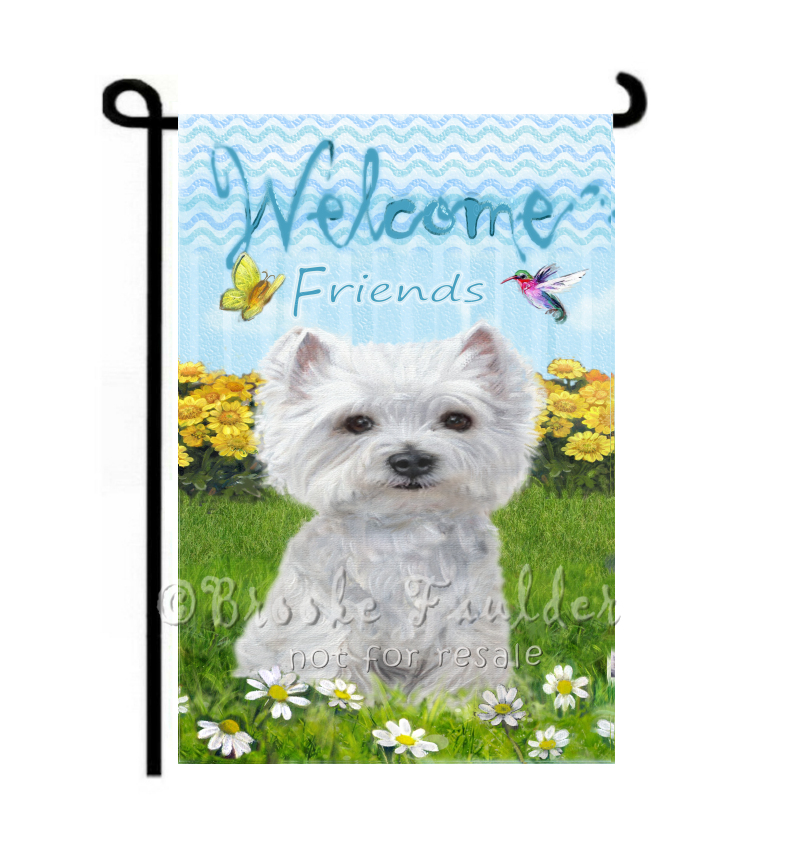
- Welcome Friends
- 12"x18"
- Weather and UV resistant
- Heavy weight, HIGH END designer boutique quality you will not find in chain stores.
- Double-sided - both sides are printed with same exact image!
- SHIPS FREE - SAME DAY or NEXT BUSINESS DAY!
- Satisfaction Guarantee!
- Direct from artist!
- Learn more about me, my mission to save dogs and see more of my artwork HERE!
$19.99
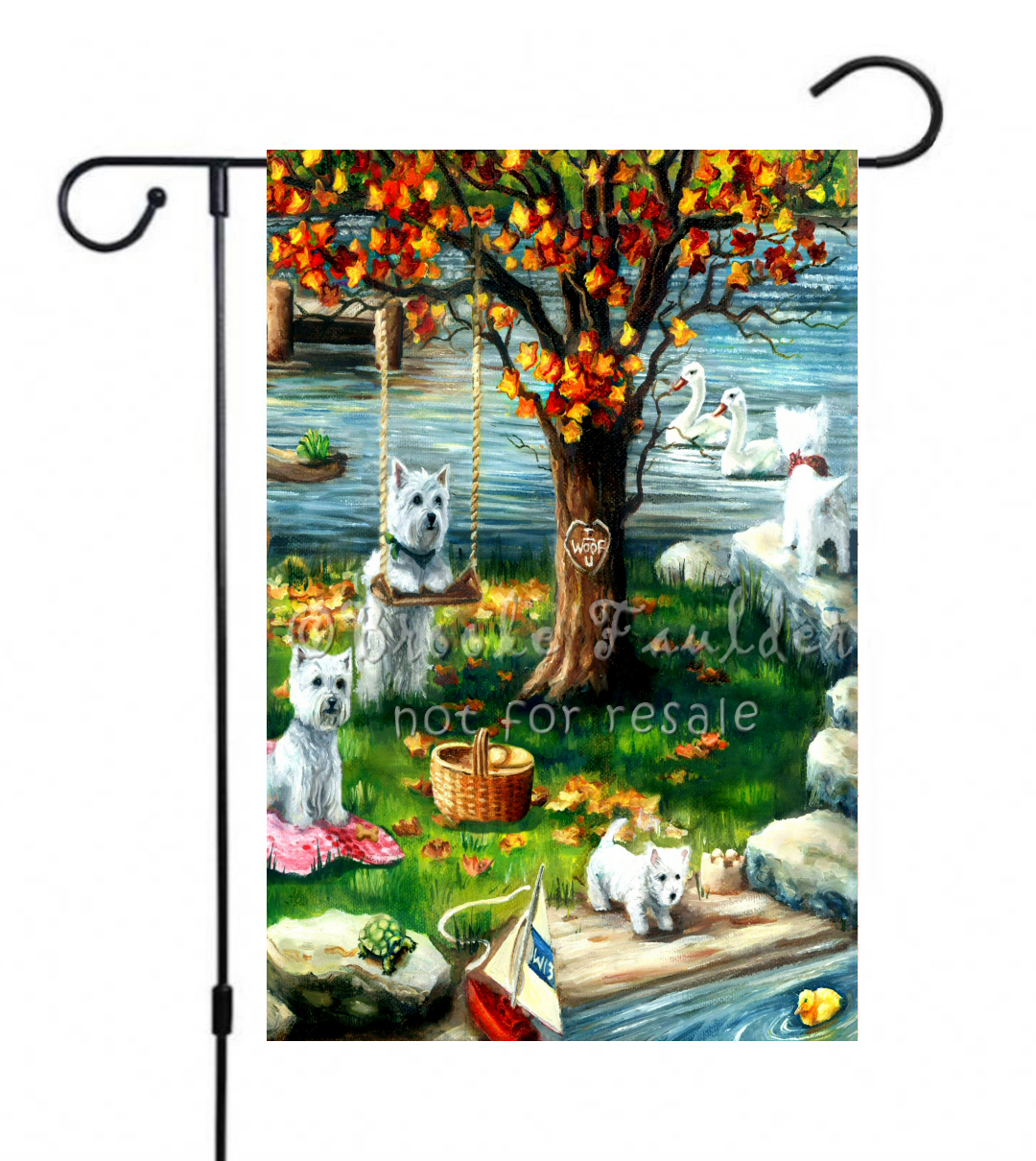
Autumn Comes Early
- 12"x18"
- Weather and UV resistant
- Heavy weight, HIGH END designer boutique quality you will not find in chain stores.
- Double-sided - both sides are printed with same exact image!
- SHIPS FREE - SAME DAY or NEXT BUSINESS DAY!
- Satisfaction Guarantee!
- Direct from artist!
- Learn more about me, my mission to save dogs and see more of my artwork HERE!
$19.99
There are Many, Many More Westie Designs Here and Other Breeds, Too!
Christmas Garden Flag with Yorkie-Cookies
The adorable Yorkie on this dog Christmas garden flag will add color and flavor to your outdoor space during the most beautiful holiday season!
Summer garden flag with Chihuahua - Home Tweet Home
Summer flag with Chihuahua. Home Tweet Home. Tan and black long haired chihuahua dog art. Original oil painting of Chihuahua by Brooke Faulder
Bulldog Flag - Autumn sunset
An english bulldog flag with autumn colors to decorate your outdoor space. Fall pumpkins, gourds, indian corn and scasrecrow complete the scene


New! Comments
Leave us a comment if you have something you'd like to share or add to what you just read here. Or contact us with questions or comments.